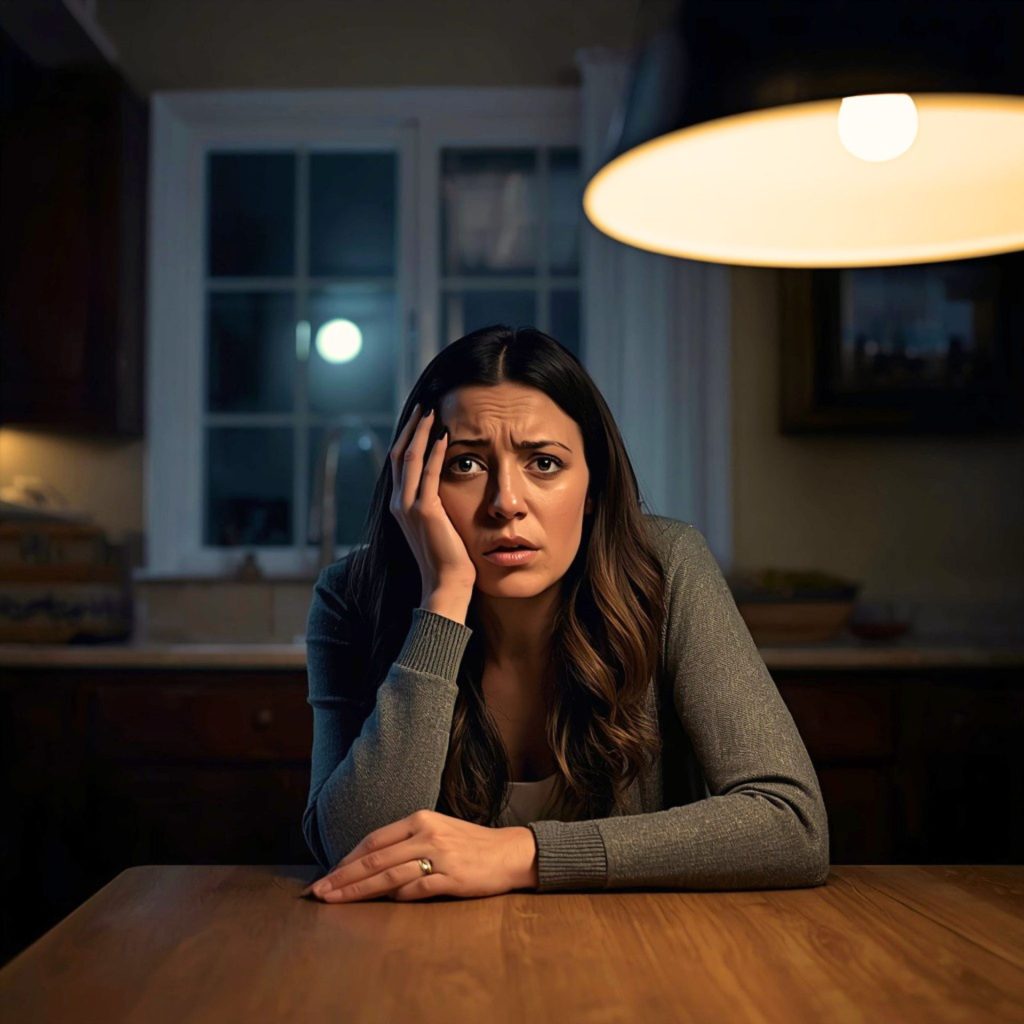
Jealousy: An Evolutionary Miscalculation

Perspective by Dr. Mike Abrams

Humans have evolved sophisticated, non-conscious mechanisms to detect infidelity, as well as methods to deal with a partner’s potential betrayal. Jealousy functions as one such evolutionary adaptation. However, for the clinician, categorizing jealousy as a sign of emotional dysfunction versus viewing it as a normal—albeit outdated—response remains a complex challenge.

The Secret Nature of Infidelity

The difficulty in evaluating jealousy stems partly from the evolutionary nature of infidelity itself. Infidelity has evolved to be concealed from the betrayed partner. Consequently, this inherent secrecy often makes the legitimately jealous partner appear irrational or inappropriate in their suspicions.

The Signal Detection Problem

To understand the nature of jealousy, it is most effective to view it as a signal detection problem.

  • In evolutionary terms, the cost of failing to detect a cheating partner has historically been far greater than the social costs of falsely suspecting a partner of cheating.
  • As a result, evolutionary natural selection has created a cognitive bias that leads us to overestimate a partner’s potential to stray.
  • Furthermore, these adaptations for jealousy are often activated by predictors of infidelity, such as discrepancies in “mate value,” even when no actual infidelity has occurred.

Cognitive-Behavioral Interventions

Cognitive-Behavior Therapy (CBT) offers several effective pathways to manage these complex evolutionary holdovers.

  • Distinguishing Mismatches: Clinicians can highlight potential mismatches by distinguishing between jealous emotions that were functional in ancestral environments and those that are less so in our modern, social landscape.
  • Aligning Goals: It is crucial to distinguish between the archaic goal of reproductive outcomes and the modern, personal goal of individual well-being.

In short, understanding the evolutionary logic of jealousy provides individuals with procedural methods for cognitively reframing both jealousy and infidelity, allowing them to reclaim their emotional well-being.

You can read the original article written by Dr. Mike Abrams at: https://psychology.ws/jealousy-evolutionary-approaches.html


The Elegant Solution: How to Live Without a Self-Image

We have spent the last few articles deconstructing the “self-esteem trap.” We’ve seen how the quest for worth leads to an emotional roller coaster, behavioral inhibition, and debilitating anxiety. We are trapped in a box where we feel we must achieve to be “good,” yet we fear the very challenges that could help us grow. Is there an alternative to this self-defeating philosophy? Can we escape the box?

The Choice: Self-Image vs. No Self-Image

The answer is a resounding yes. However, we often make the mistake of thinking we can get something for nothing. Many “positive thinking” manuals promise a better life without asking for the one sacrifice that actually matters: surrendering the compulsive drive for self-esteem.

You do not have a choice between “self-esteem” and “self-hatred”. Those are merely two sides of the same self-rating coin. Your true choice is whether you will rate your “self” at all. You can choose to have a self-image, or you can choose to have no self-image.

The Elegant Solution

Instead of labeling yourself as “honorable” or “foolish,” you can adopt what Dr. Albert Ellis called the “Elegant Solution.” This involves a subtle but critical shift in perception:

  1. Stop global ratings: Refuse to rate your entire being as “good” or “bad.”
  2. Rate only your behavior: Specifically and scientifically evaluate your actions. Did that speech go well? Did you handle that project efficiently? That is an empirical observation.
  3. Accept your humanity: Acknowledge that you are a complex, fallible human being who performs millions of acts during your life—some successful, some inefficient, and many indifferent.

[CLINICAL INSIGHT]

  • Key Point #6: Your choice is not between self-esteem and self-condemnation. It is between establishing an overall self-image and establishing no self-image. Choose to accept yourself unconditionally, regardless of your performance.

The Freedom to Enjoy

When you refuse to habitually calculate your “self-value,” you stop monitoring your worth like a stock market ticker. You become like the other creatures of the natural world, content simply observing and interacting with the environment, free from the heavy burden of “proving” your existence.

Your goal for the rest of your life can shift from proving yourself to enjoying yourself. You can choose to accept your existence, your humanity, and your potential, whether or not you perform perfectly, whether or not you are loved by everyone, and whether or not you face challenges at work or in your personal life.

Final Thoughts

Giving up the quest for self-esteem is not a sign of decadence; it is the ultimate act of liberation. It is the beginning of a life lived with curiosity rather than fear.

The Anxiety Sabotage: Why You’re Afraid to Try New Things

Introduction

If the pursuit of self-esteem were truly beneficial, the most successful and talented people should be the most fearless. Yet, we often see the opposite. In clinical practice, we find that the “theology of self-esteem” rarely stimulates genius; instead, it often results in severe behavioral inhibition and debilitating anxiety. With their entire self-worth hanging in the balance, many individuals desperately avoid any situation where their “self-image” might be at risk.

The Safety Trap

Take, for example, a person who feels romantically attracted to someone they perceive as “out of their league.” They might fantasize about a relationship, but their self-rating philosophy guarantees they will never make a move. Why? Because their precious self-esteem would be destroyed if they were rejected. They choose to “play it safe,” opting for relationships that feel less risky, not because they are genuinely satisfied, but because their ego demands protection from potential disgrace.

This is the “Anxiety Sabotage.” When we view failure as a verdict on our entire character, we stop being explorers of the world and become prisoners of our own pride.

[CLINICAL INSIGHT]

  • Key Point #4 & #5: The compulsive drive for self-esteem promotes social inhibition and leads to frequent anxiety. Ironically, this anxiety becomes the very obstacle that prevents us from achieving the goals we think we need to feel “worthy.”

The Built-In Self-Destruct Mechanism

This drive for self-esteem functions as a built-in self-destruct mechanism. Consider an individual struggling with sexual performance or a nervous public speaker. Instead of focusing on the task at hand, the pleasure of a partner or the content of a speech, they obsessively monitor themselves for signs of “failure.” They terrorize themselves with visions of humiliation. By concentrating on how they are doing, rather than what they are doing, they sabotage the very performance they were trying to perfect.

Next Steps

Recognizing that your fear of failure is actually a fear for your ego is a powerful realization.

  • Continue your journey toward emotional stability: In our final article, we reveal the “Elegant Solution”, how to stop rating yourself entirely and find peace without needing to prove your worth.
  • For a comprehensive academic overview: Visit the full archives of Dr. Mike Abrams’ research on REBT for Sexual Problems at psychology.ws

The Dark Side of Pride: From Self-Esteem to Self-Damnation

Introduction

We are often told that pride is a virtue, that taking pride in our work or our character is the hallmark of a healthy, functioning adult. But what if “pride” is actually the root of our most profound emotional distress? Dr. Albert Ellis, the innovative creator of Rational Emotive Behavior Therapy (REBT), suggested that what we call “self-esteem” is often just a manifestation of what he termed a “Jehovah complex.”

The Grandiose Leap

The Jehovah complex rears its grandiose head when an individual makes a “magical leap” in their thinking. A person might realistically observe that they have performed a task well or that they possess a desirable character trait. This is an accurate, empirical assessment. However, the complex takes over when the individual follows this observation with an arrogant, non-sequitur conclusion: “Because I performed well, I am a superior human being.”

The individual ceases to see a distinction between their behavior and their essence. To them, they are the same. If their performance is good, they become “good.” Since their achievement was superior, they consider themselves godlike, far above the “lowly” others they defeated.

[CLINICAL INSIGHT]

  • Key Point #3: The concept of self-esteem leads, inevitably and intermittently, to self-damnation.

The Inseparable Twins

This philosophy is a dangerous “package deal.” If you view yourself as exalted and lordly for your successes, you will automatically view yourself as paltry and worthless when you fail. Self-esteem and self-hatred are not opposites; they are twin incarnations of the same underlying philosophy, the belief that one’s worth must be appraised in relation to achievements. You cannot lust after self-worship without very soon suffering the agonies of self-damnation.

The individual who relies on self-esteem is trapped on an emotional roller coaster. They may soar quickly to great heights, but they will inevitably sink rapidly into the depths of despair. Both the euphoria and the dejection stem from the same source: the rigid, contingent philosophy of self-rating.

Next Steps

Understanding that your “self-worth” is an egocentric vapor is the first step toward true psychological freedom.

  • Continue your journey toward emotional stability: In our next article, we explore why this obsession with self-esteem actually prevents you from taking risks and trying new things.
  • For a comprehensive academic overview: Visit the full archives of Dr. Mike Abrams’ research on REBT for Sexual Problems at psychology.ws

The Treadmill of Achievement: Why Your Success Never Lasts

Introduction

Is there an “ultimate” success? Many people spend their entire lives believing that attaining a specific position, a CEO chair, a medical degree, or a “dream life” would forever rid them of feelings of inadequacy. They assume that if they just reach that next milestone, they will finally arrive at a state of permanent self-worth. History, however, tells us otherwise: success is fleeting, and the ego is perpetually hungry.

The Mechanism of Dependency

Consider the example of top-tier athletes. Many retired boxers feel compelled to re-enter the ring, not for the money, but to resurrect that former surge of pride that came through defeating an opponent and basking in public adoration. When success becomes “routine,” it ceases to feed the ego.

Even Presidents of the United States, people at the very pinnacle of power, have admitted in their memoirs that they often suffered from gnawing insecurity and self-doubt, regardless of their monumental achievements. Richard Nixon, on the night of his landslide 1972 re-election, famously described feeling no pleasure or excitement. After four years in the highest office, the position itself had ceased to be a reliable source of self-validation.

[CLINICAL INSIGHT]

  • Key Point #2: When self-esteem is based on accomplishments, it must be earned repeatedly. It is never permanent.

This creates a vicious cycle, a psychological treadmill where we must constantly run just to maintain that temporary glow of worth. The path to stability is not to run faster; it is to stop rating our own value based on passing results.

Next Steps

Freeing yourself from the dependency on self-esteem is the first step toward lasting contentment.

  • Continue your journey toward emotional stability: In our next article, we explore the “Jehovah Complex” and why pride is often just the flip side of self-damnation.
  • For a comprehensive academic overview: Visit the full archives of Dr. Mike Abrams’ research on REBT for Sexual Problems at psychology.ws

The Self-Esteem Trap: Why Chasing Worth Makes Us Unhappy

Introduction

Twenty years ago, advice for an unhappy person would have been simple: “Stop dwelling on your own misfortune. Try instead to become creatively absorbed in outside interests and external activities.” Today, however, the message is radically different: “Build up your own sense of self-worth. Take pride in yourself! Your feelings of unhappiness will surely evaporate if you only esteem yourself more highly!” But is this new “self-esteem” religion actually making us happier, or is it just leading us into a vicious cycle?

The Philosophical Void of Self-Esteem

We live in an era obsessed with the internal self-image. Bookstores are filled with volumes promising “breakthrough techniques” for conquering our doubts about our “true” value. Yet, despite decades of promoting self-esteem, the average person today is as confused as ever.

The problem lies in the fact that the entire concept of “personal worth” has become hopelessly ill-defined and philosophically empty. Instead of objectively appraising the external world, we have become preoccupied with the internal effort to elevate our own self-appraisal. When we say someone has “self-esteem,” we rarely mean they value themselves without justification. We tend to rate ourselves based on conditions—our virtues, physical attractiveness, or professional achievements.

[CLINICAL INSIGHT]

  • Key Point #1: Most people unfortunately believe that self-esteem must, in some way, be earned through accomplishments.

This approach, where we tie our worth to external factors, turns self-esteem into a fragile structure that collapses the moment we stop “achieving.” Instead of becoming stable, we become slaves to our own ratings.

Explore the Source

If you wish to delve deeper into the psychological foundations of this issue, you can read Dr. Mike Abrams’ original research and full analysis on REBT for Sexual Problems at psychology.ws

Can Love Survive Infidelity? A Clinical Approach to Healing

Infidelity is often viewed as the ultimate betrayal, a catastrophic event that marks the end of a relationship. Yet, in clinical practice, we find that human behavior—especially regarding love, sex, and bonding—is rarely black and white. To truly understand why relationships fracture and whether they can be salvaged, we must move beyond blame and look toward the mechanisms that drive us.

The Biology of the “Mate-Switch”

From an evolutionary perspective, human beings have developed psychological modules designed to monitor relationship quality. When a partner is perceived as no longer serving our personal or evolutionary goals, or when a more “fit” alternative appears, the mind may unconsciously initiate a “mate-switching” process.

For many, infidelity feels justified because these ancient, non-conscious drives are incredibly compelling—often more so than the deterrents of guilt or remorse. Understanding this is not an excuse for adultery, but it is the first step toward de-escalating the crisis. It allows both partners to stop viewing the infidelity as a moral failing and start seeing it as a predictable, albeit destructive, psychological pattern.

The “Exit Strategy” Trap

One of the most difficult challenges in couples counseling is discerning sincerity. Often, the unfaithful partner will suggest therapy, but not to reconcile; they use it as an “exit strategy.” It is a way to leave the marriage while maintaining the moral high ground, claiming they “tried everything.”

A skilled clinician must determine early on if both partners are genuinely committed to the relationship. If one partner is secretly seeking a way out, the counseling process risks being a waste of time and emotional energy. Restoration requires two people who are both willing to confront their own irrational beliefs.

CBT: Rewiring the Relationship

Once commitment is established, the focus shifts to Cognitive Behavioral Therapy (CBT). We work to identify the “distorted cognitions” that keep couples locked in cycles of rage or resentment:

  • For the Betrayed: Moving past the urge for vengeance. Realizing that “I must punish them” or “I am worthless” are irrational beliefs that prevent healing.
  • For the Unfaithful: Moving past the victim mentality. Challenging the belief that “my partner forced me to do this” or “I have an absolute right to gratification.”

We help partners see that infidelity, while painful, is not disastrous. It is a challenge that can be overcome if both individuals are willing to replace rigid, demanding thoughts with a more rational perspective on intimacy.

Is Lasting Love a Choice?

We often overestimate the importance of constant, effortless romantic love. In reality, romantic passion naturally diminishes over time. The research into long-term relationships suggests that enduring unions are not those that happen “by magic,” but those that are built by conscious effort.

Just as we must consciously override our evolutionary cravings for salt, sugar, and fat to maintain physical health in a world of overabundance, we must override our evolutionary impulses for “mate-reappraisal” to maintain relationship health.

The Path Forward

If you are currently navigating the aftermath of infidelity, know that restoration is possible, but it requires a fundamental shift. It involves:

  1. Accepting that evolved impulses are present but not destiny.
  2. Challenging the irrational beliefs that fuel your anger or your urge to stray.
  3. Collaborating to build a new relationship, rather than obsessing over the ruined past.

Love is not just a feeling that happens to us—it is a structure we build together, brick by brick, through adversity and growth.

If you are finding yourself in a similar situation and are seeking a science-based approach to healing your relationship, schedule a consultation at Mallory Creek Retreat.

This article is an adaptation of Dr. Abrams’s clinical observations, originally published in his comprehensive research series on fidelity and mate-switching. You can read the original analysis in full at psychology.ws

The Quest for Stability: When Status and Infidelity Collide

While some individuals use infidelity as a deliberate exit strategy, others find themselves drawn into affairs as a response to external crises. In clinical practice, we often encounter the “mate-switching” phenomenon through the lens of shifting value, where a partner’s perceived utility diminishes under the weight of financial or professional instability.

The Psychology of Utility

From an evolutionary perspective, mate selection is rarely purely romantic; it is often deeply intertwined with perceptions of status, resource acquisition, and stability. When those resources are suddenly threatened, the psychological “security systems” of a partner can be triggered. Karen’s case study highlights how easily a seemingly flawless marriage can fracture when the foundation of mutual utility is shaken.

The Case of Karen: Choosing the “Fit” Partner

Karen, a 32-year-old special education teacher, was highly aware of her biological goals. She wanted a partner who could provide stability for the family she envisioned. When she realized her “ideal” partner (a tall, athletic type) was not appearing, she made a conscious, pragmatic choice: she chose Val.

Val was not the “Norse god” of her dreams, but he was educated, articulate, and financially secure. Karen reasoned that his professional accomplishments made him excellent “breeding stock.” Their marriage was successful, bolstered by shared goals and the arrival of their first child. However, their dynamic was built on a fragile pillar: Val’s success.

The Catalyst: When Status Plummets

The relationship began to deteriorate not because of a loss of love, but because of a loss of status. When Val’s company dissolved, and he found himself in a low-income position, the professional and financial power dynamic shifted. Karen, forced to work two jobs, began to view Val not as a husband but as a liability.

Her resentment was compounded by Val’s own psychological collapse. His shame and self-effacing demeanor—which Karen interpreted as weakness—created a vacuum of attraction. In the face of mounting debt and two children, Karen’s “pragmatic” choice for a partner began to look like a poor investment.

The Role of the “Mate Poacher”

Into this void stepped Bert, a college friend of Val’s. Bert possessed everything that Val had lost: financial abundance, professional success, and an upbeat, reassuring demeanor. Bert did not just provide a loan; he provided a psychological escape route.

Karen’s affair with Bert was, at least non-consciously, an attempt to secure the “fit” partner she originally sought to replace the one who had “failed.” When Karen finally divorced Val to pursue a future with Bert, she was met with a harsh reality: Bert was willing to provide support as long as he was the “hero,” but he was not willing to take on the responsibility of marriage to a woman with two children.

Conclusion

Karen’s story is a sobering look at how conditional love can masquerade as companionship. Her affair was not a simple act of betrayal; it was a desperate, failed attempt to maintain a standard of living and security that she felt was slipping away. When the “poacher” refused to commit, the illusion shattered, revealing that the grass is not always greener; it is often just a different set of challenges.

This case study is based on the extensive clinical research and writings of Dr. Abrams. For a deeper understanding of the evolutionary psychology behind these relationship patterns, we invite you to explore his original research here: psychology.ws

Note: This article is an adaptation of Dr. Abrams’s clinical observations, originally published in his comprehensive research series on fidelity and mate-switching. You can read the original analysis in full at psychology.ws.

The Illusion of Choice: When Infidelity Becomes an Exit Strategy

Infidelity is rarely just a singular moment of weakness. In clinical practice, we often observe a phenomenon that goes beyond simple impulsivity. It is a calculated, often non-conscious psychological maneuver known as “mate-switching.” For many, an affair serves not as a distraction, but as a bridge to exit a marriage they no longer feel they have the courage to leave.

The Evolutionary Perspective

From an evolutionary standpoint, the “Mate-Switching Hypothesis” suggests that humans have evolved psychological mechanisms to identify when a long-term relationship is no longer serving their fitness or personal goals. When a partner is perceived as less valuable, or when a more “fit” or desirable alternative appears, individuals may unconsciously initiate a “switch.” However, in modern society, we rarely make these transitions cleanly. Instead, we see the emergence of the “Exit Strategist.”

The Profile of the “Exit Strategist”: The Case of Tyler

Take the case of Tyler, a man in his early 50s. To his community, Tyler was the “gold standard”, a successful attorney and mayor of a wealthy suburban town, possessing the athletic build and youthful vigor of a man half his age. On the surface, he had everything. Below the surface, he was architecting a complete life overhaul.

Tyler described his 24-year marriage as a “love of convenience,” a union he claimed was forced upon him by his parents’ expectations. Yet, upon closer clinical examination, his narrative faltered. Their life had been filled with travel, shared goals, and genuine affection for decades. The “unhappy union” narrative was a necessary fiction, a psychological justification to alleviate the guilt of betrayal.

The Affair as a Bridge

Tyler did not just stumble into an affair; he sought a “successor.” His relationship with Anna, a woman two decades his junior, was positioned as his “great love.” He idealized her, calling her his confidant and best friend. However, the true purpose of the affair became clear once he moved in with her: Anna was not the destination; she was simply the vehicle for his exit.

As soon as the marriage to his wife, Kelly, was formally dissolved, the idealization of Anna began to crumble. Once Tyler felt secure in his independence, he began to devalue Anna, pointing out her flaws with the same cold indifference he had once directed toward his wife.

The Pattern of Perpetual Dissatisfaction

The tragedy of the “exit strategist” is that they are rarely looking for a better partner—they are looking for a way to evade their own commitments. When Tyler broke his commitment to Anna, he immediately began searching for other women on social media, reinforcing a cycle of serial infidelity.

The pattern Tyler followed, devaluing the “bridge partner” once the exit is successful, is a hallmark of the serial seeker. Once the adrenaline of liberation fades, the individual is forced to confront the reality that they have not solved their internal dissatisfaction; they have merely changed their environment. Tyler’s subsequent habit of searching for new romantic pursuits on dating apps reveals the core issue: the “mate-switching” mechanism had become a compulsive cycle. For Tyler, the thrill was never in the partner; it was in the pursuit of the next version of himself.

Conclusion

Tyler’s case illustrates a chilling reality: for the “exit strategist,” infidelity is not a symptom of a failing marriage, but a symptom of a failing ability to commit to one’s own life choices. The new partner loses her luster the moment the liberation is achieved, revealing that the problem was never the wife or the girlfriend; it was the seeker himself.

This case study is based on the extensive clinical research and writings of Dr. Abrams. For a deeper understanding of the evolutionary psychology behind these relationship patterns, we invite you to explore his original research here: psychology.ws

Note:

This article is an adaptation of Dr. Abrams’s clinical observations, originally published in his comprehensive research series on fidelity and mate-switching. You can read the original analysis in full at psychology.ws.

Is Monogamy a Myth? The Evolutionary Psychology Behind Infidelity

When we enter a romantic relationship, most of us share the same goal: to find a partner for life. However, statistics are relentless—approximately half of all marriages end in divorce. While society imposes the ideal of lifelong monogamy, evolutionary psychology offers a different perspective on why our relationships often struggle and why infidelity has become a “norm” across cultures throughout history.

What is the “Mate Switching” Hypothesis?

Evolutionary psychology suggests that infidelity is not always just “bad intent,” but often acts as a strategic “exit strategy” from a committed relationship. The “mate switching” hypothesis explains that individuals, especially during their peak reproductive years, continually (and often unconsciously) assess the mate value of their current partner against other potential companions.

Why Do We Stray?

While we like to think our choices are purely rational, the factors that bring us together often have a “short half-life.” Passion usually diminishes after a few years, and factors that increase the risk of seeking new partners include:

  • Weak emotional attachment and low relationship satisfaction.
  • A decline in sexual passion.
  • Distrust in a partner’s fidelity.
  • Changes in social or financial status that increase one’s perceived marketability.

Infidelity as a Survival Mechanism.

For our ancestors, infidelity had an important adaptive function. Men increased their reproductive opportunities through extra-dyadic sex, while women sought partners with superior phenotypes to obtain better genes. Today, these ancient mechanisms manifest through jealousy and mate-guarding behaviors, which often create emotional firestorms in modern relationships.

Is Monogamy Biologically Real?

Authors such as Barash and Lipton argue that the human tendency for polygamy is innate. Even in animal species often cited as emblems of monogamy (like birds), it is common to find offspring sired by males outside the pair bond. However, the fact that we are biologically predisposed to certain challenges does not mean we are “destined” for failure.

Conclusion: A Conscious Effort to Sustain Love.

The fact that our impulses are biologically driven does not mean we are helpless. On the contrary, it means that healthy, lasting relationships require conscious effort. Understanding these evolutionary patterns helps couples interpret their fears, jealousy, and crises not as a sign that the relationship is “broken,” but as a challenge that can be overcome through communication and work.

Want to better understand the dynamics of your relationship? Our therapists are here to help you build a lasting bond through the application of modern psychological insights.